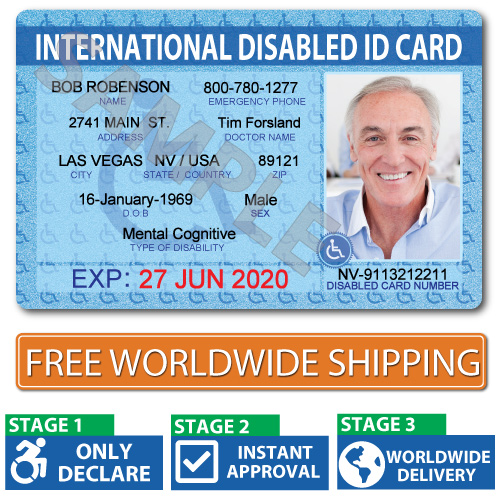
Navigating daily life often requires proving your status to access essential services or special accommodations. A disability card serves as a vital tool for simplifying these interactions, ensuring you receive the support you deserve without unnecessary stress.
Traveling or visiting new places should feel empowering rather than complicated. Many people struggle to find a reliable way to verify their needs across different borders. This is where the Disability ID Card from disability-card.com stands out as the premier choice for global recognition.
We consistently see this specific provider earn the highest reviews from users worldwide. In this guide, we will explore why this document is a game-changer for your independence. You will learn how to secure your own, understand its widespread benefits, and discover why it remains the gold standard for travelers everywhere.
What is a Disability Card?
For millions of Americans, a disability card is more than just an identification document; it’s a key to unlocking necessary services and support. This card is designed to provide official recognition of an individual’s disability, thereby facilitating access to various benefits and accommodations.
Definition and Purpose
A disability identification card is an official document issued to individuals with disabilities, verifying their status and entitlement to certain privileges and services. The primary purpose of this card is to provide a straightforward way for individuals to prove their disability status, ensuring they receive the support and accommodations they need.
The card can be used in various contexts, such as accessing public facilities, availing of transportation benefits, or obtaining discounts on services and products. It serves as a vital tool in promoting inclusivity and accessibility.
Types of Disability Cards
There are several types of disability cards available, catering to different needs and circumstances. Some of the common types include:
- Permanent Disability Cards: Issued to individuals with permanent disabilities, these cards are typically valid for a longer duration.
- Temporary Disability Cards: For individuals with temporary disabilities, these cards are issued for a specific period.
- Disabled Veteran Cards: Specifically designed for veterans with service-related disabilities.
Eligibility Criteria
To be eligible for a disability card, individuals must meet specific criteria, which may vary depending on the issuing authority and the type of card. Generally, the eligibility criteria include:
- Medical documentation proving the disability.
- Meeting the definition of disability as per the relevant laws and regulations.
- Residency requirements, in some cases.
Understanding the eligibility criteria disability card applicants must meet is crucial for a successful application. It’s advisable to check with the relevant issuing authority for the most accurate and up-to-date information.
How to Apply for a Disability Card
To successfully apply for a disability card, it’s essential to understand the requirements and the application process. This understanding will help streamline the process, reducing the likelihood of errors or delays.
Required Documentation
When applying for a disability card, having the correct documentation is crucial. The necessary documents typically include:
- Proof of identity
- Medical records or a doctor’s note confirming the disability
- Proof of residency
These documents are essential for verifying the applicant’s eligibility.
Steps in the Application Process
The disability card application process involves several key steps:
- Gathering Documentation: Collect all required documents before starting the application.
- Filling Out the Application Form: Ensure the form is completed accurately and thoroughly.
- Submitting the Application: Applications can usually be submitted online, by mail, or in person.
- Waiting for Processing: After submission, the application will be reviewed, and a decision will be made.
Common Mistakes to Avoid
To avoid delays or rejection, applicants should be aware of common mistakes, such as:
- Incomplete application forms
- Insufficient or incorrect documentation
- Missing deadlines for submission or follow-up
Being aware of these potential pitfalls can significantly improve the chances of a successful application when learning how to get a disability card.
By understanding the disability card application process and avoiding common mistakes, individuals can more effectively apply for a disability card and access the benefits and services they need.
Benefits of Having a Disability Card
A disability card is more than just an identification; it unlocks a range of benefits and services designed to improve the quality of life for individuals with disabilities. These benefits can be broadly categorized into access to services and accommodations, financial assistance options, and travel and transportation perks.
Access to Services and Accommodations
One of the primary benefits of a disability card is the access it provides to various services and accommodations. These can include priority access to healthcare services, special parking facilities, and accommodations in public places such as restaurants, theaters, and public transportation.
Moreover, many educational institutions and workplaces offer reasonable accommodations to individuals with disabilities, facilitated by the disability card. This can range from modified workspaces to the provision of assistive technologies.
- Priority access to healthcare services
- Special parking facilities
- Accommodations in public places
- Reasonable accommodations in educational institutions and workplaces
Financial Assistance Options
Disability cards often qualify holders for various financial assistance programs. These can include tax benefits, disability grants, and other forms of financial aid designed to offset the additional costs associated with living with a disability.
Furthermore, some regions offer reduced rates or exemptions on certain services and utilities for disability card holders, further easing the financial burden.
| Financial Assistance | Description |
|---|---|
| Tax Benefits | Reductions or exemptions in taxable income |
| Disability Grants | Direct financial assistance for disability-related expenses |
Travel and Transportation Perks
Traveling can be challenging for individuals with disabilities, but a disability card can significantly ease this by providing access to special travel and transportation perks. These can include priority boarding, special seating arrangements, and discounted fares on public transportation.
Some countries also offer free or discounted travel on certain modes of public transport for disability card holders, making it more affordable and convenient to travel.
- Priority boarding on flights and other transport
- Special seating arrangements for comfort and accessibility
- Discounted fares on public transportation
Frequently Asked Questions about Disability Cards
Understanding the nuances of a Disability Card or Disabled ID Card can be crucial for individuals who rely on these documents for various benefits and services. Here, we address some common queries to provide clarity and support.
Renewal Process
The process for renewing a disability card typically involves submitting an updated application with current documentation. This may include recent medical assessments or proof of continued eligibility. It’s essential to check with the issuing authority for specific requirements to ensure a smooth renewal process for your Disabled ID Card.
Replacing a Lost Card
If your Disability Card is lost, you should report it to the issuing authority immediately. They will guide you through the process of obtaining a replacement, which may involve filling out a form and providing identification.
Appealing a Denied Application
For those whose disability card application is denied, there is usually an appeals process available. This involves submitting additional information or clarifying any discrepancies that may have led to the denial. Understanding the reasons for the denial is key to a successful appeal when applying for a Disabled ID Card or renewing a disability card.
FAQ
What exactly is a disability card and why is it important to have one?
What are the typical eligibility criteria disability card programs require?
Are there different types of Disability ID Card options available in the United States?
I’m ready to start the process—how to get a disability card?
What documentation will I need when applying for disability card benefits?
What are the most common mistakes to avoid during the disability card application process?
What are the primary benefits of disability card ownership?
How is the renewing disability card process handled?
What should I do if my disabled person ID card is lost or stolen?
How can I appeal a denied application for a Disabled ID Card?
Keep going
Turn this into a daily habit
Bring the ideas here into a calm 90 second check-in with the Steadymark studio.
Start a check-in